Fictional website — do not buy · This is a test site — orders will not be fulfilled · No purchases will be processed · You will not receive your order · This website is for demonstration purposes only · Fictional website — do not buy · This is a test site — orders will not be fulfilled · No purchases will be processed · You will not receive your order · This website is for demonstration purposes only ·

Tag: sun

  • Choosing the right material for your needs

    A great day at the beach has less to do with the beach itself and more to do with how well you have prepared for it. The difference between a day spent battling sand in your food, hunting for your phone in a soggy bag, and sweating through a conventional towel — and a day where everything just works — comes down almost entirely to the accessories you bring.

    Most people pack a towel, sunscreen, and their phone, and call it done. But a few targeted additions transform the experience in ways that are immediately and consistently noticeable. These are not luxury items. They are practical solutions to specific, recurring problems that every regular beach-goer encounters, season after season.

    The accessories that actually make a difference

    The sand-free mat is the single most impactful upgrade to any beach setup. The Fatboy Sand Free Mat uses a double-layer mesh construction that allows sand to fall through from above while blocking it from rising from the ground beneath. The result is a mat that stays genuinely clean throughout the day rather than becoming progressively grittier with each hour on the beach. At 200 x 200cm it comfortably accommodates two adults with room for bags and accessories.

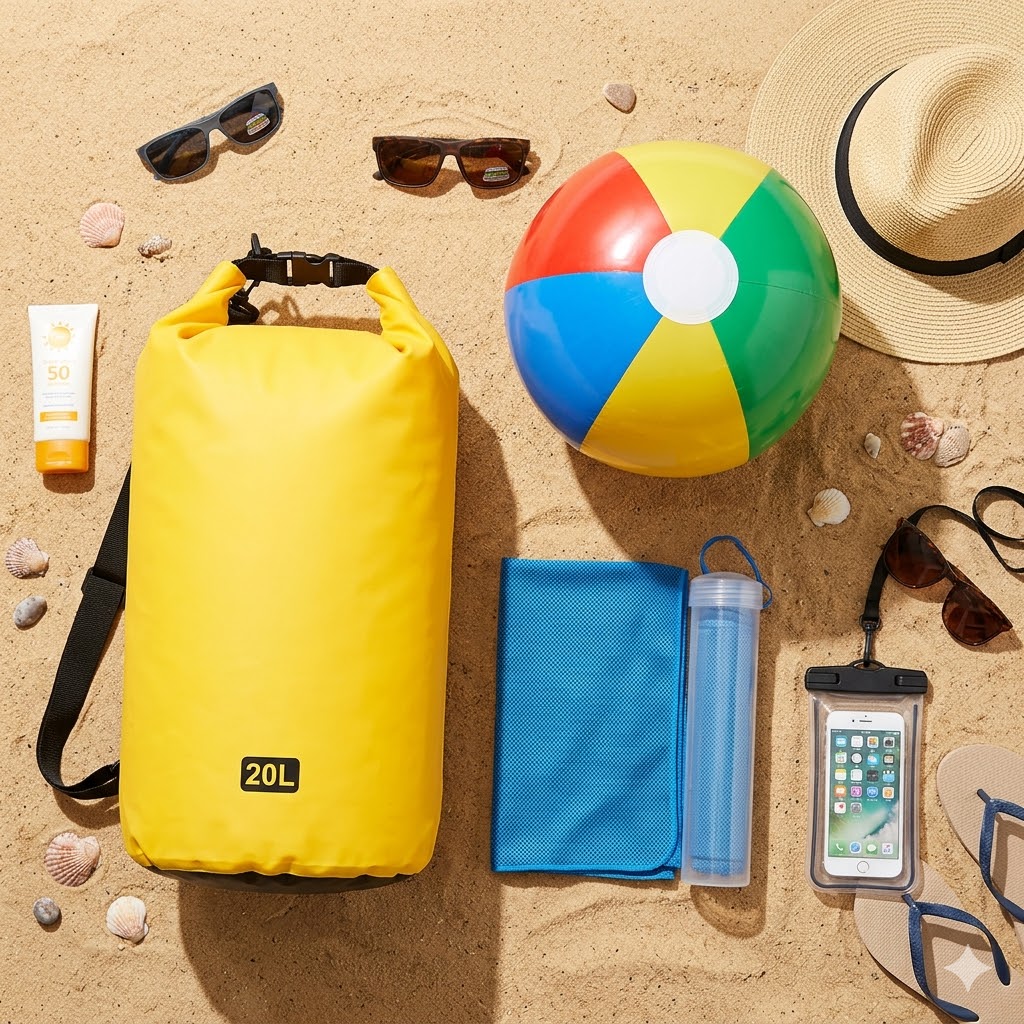
    A waterproof dry bag solves one of the most anxiety-inducing aspects of beach life — what to do with your phone, wallet, and keys when you want to swim. The Osprey Waterproof Dry Bag achieves an IPX8 waterproof rating through its roll-top closure system, meaning it can be fully submerged to two metres. The transparent phone window allows use without breaking the seal, a detail that makes a significant practical difference throughout the day.

    For families, the Decathlon Kids Snorkel Set makes underwater exploration safe and accessible from ages four upwards, with a dry-top valve that prevents water ingestion even when fully submerged. The Quiksilver Sand Anchor Tent deploys in three seconds and holds against winds up to 40km/h — real coastal conditions — without any poles or assembly.

    Building a kit that works for you

    • For families: snorkel sets, beach balls, and paddle sets provide screen-free activity for all ages
    • For comfort: an inflatable lounger and cooling towel make heat manageable for full-day stays
    • For music: the JBL Waterproof Speaker delivers proper audio quality in a fully submersible package
    • For shade: the Sand Anchor Tent provides instant UPF 50+ coverage without any setup complexity
    • For organisation: the Fatboy Insulated Beach Bag combines a cooler, wet compartment, and sand-resistant exterior
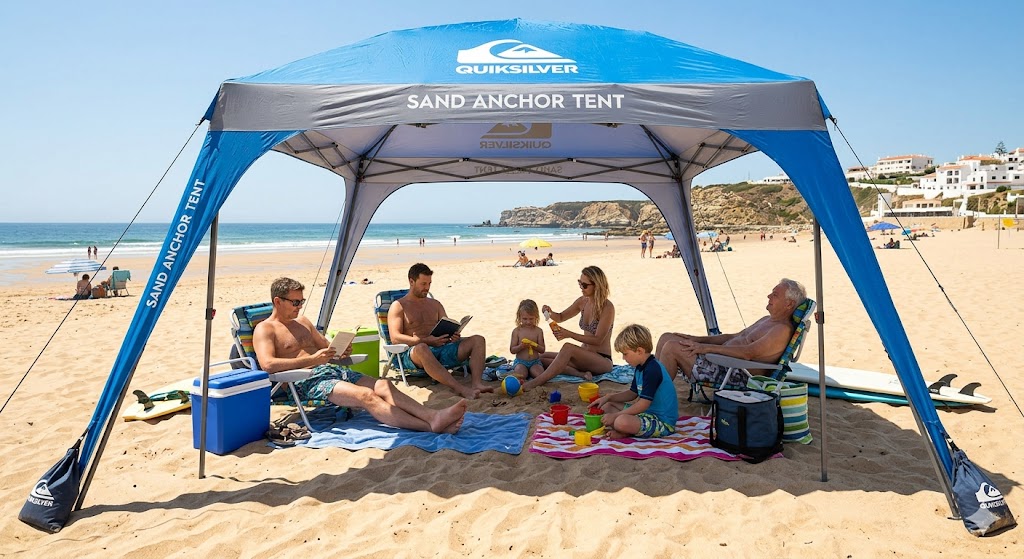
    Family relaxing under a Quiksilver Sand Anchor Tent on a sunny European beach

    The key principle when assembling beach kit is to think in terms of problems solved rather than items owned. Every piece should earn its place by addressing something specific — the wet swimwear problem, the hot phone problem, the sand-in-everything problem, the shade problem. When each item has a clear job, you end up with a compact, purposeful kit rather than a heavy bag full of things you might need.

    Investing in quality beach accessories also makes economic sense over time. A well-made dry bag lasts five to ten seasons. A quality mat, tent, or speaker, properly cared for, outlasts several cheap equivalents. The upfront cost of choosing well pays back quickly in both reliability and the simple, consistent pleasure of a beach day where everything works exactly as it should — every single time.

  • Bucket Hats: Style, Sun Protection and How to Wear Them

    Few accessories have made as complete a journey from functional workwear to high fashion as the bucket hat. Originally worn by Irish farmers and fishermen in the early 1900s, it became military issue in the 1960s, was adopted by the surf and hip-hop communities through the 1980s and 90s, and has spent the last decade firmly established as one of the most versatile pieces of summer headwear across every demographic and fashion context.

    The appeal is not hard to understand. The bucket hat is democratic in a way that more structured headwear is not — it adapts to whoever is wearing it, suits virtually every face shape, and shifts naturally between casual and more considered contexts depending on the fabric, colour, and outfit it is paired with.

    The practical case for wearing a bucket hat

    Beyond the fashion credentials, the bucket hat is genuinely one of the most effective forms of everyday sun protection available. The downward-angled brim shades the face, ears, and upper neck simultaneously — areas that conventional baseball caps leave almost entirely exposed. For people who spend extended time outdoors, this 360-degree coverage makes a meaningful difference in cumulative UV exposure over a day or a season.

    UPF ratings on bucket hats work similarly to SPF on sunscreen. UPF 30 blocks around 97% of UV radiation, while UPF 50+ blocks over 98%. The fabric weight, weave density, and any chemical treatments applied all contribute to the final rating. Our range covers UPF 30 through to UPF 50+ across different fabric types and constructions.

    • UPF 50+ provides the highest level of UV protection available in fabric
    • The 360-degree brim protects face, ears, and neck — areas caps leave exposed
    • Unstructured designs collapse flat for packing and storage
    • Washed and pre-treated fabrics maintain their softness through repeated washing

    Choosing the right material for your needs

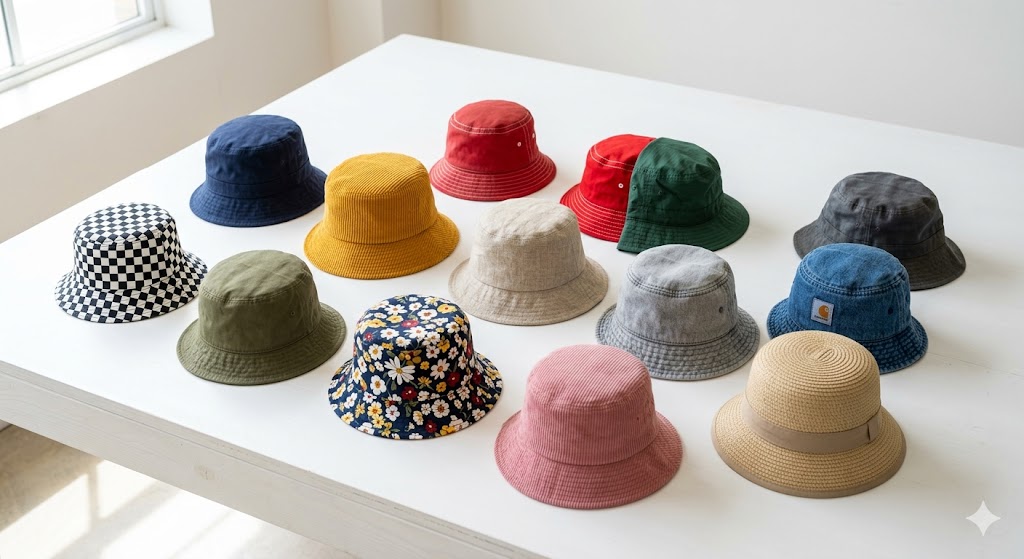
    Cotton canvas is the classic choice, offering immediate softness in pre-washed versions and a lived-in character that improves with wear. Quick-dry polyester is essential for water-based activities, shedding water fast and drying in minutes where cotton stays heavy and soggy. Linen is the premium warm-weather option, breathing better than cotton in high temperatures and developing a natural patina over time.

    Young person wearing a Kangol Festival Tie Dye bucket hat at an outdoor summer event

    Recycled nylon ripstop, as used in Patagonia’s range, is the sustainable performance choice — lightweight, packable, and built for outdoor adventure. At the more fashion-forward end, corduroy and denim offer texture and visual weight that work well for urban settings and transitional seasons. Whatever your context, there is a bucket hat construction that suits it — and wearing one is always better than not wearing one.

  • The Ultimate Guide to Choosing Sunglasses

    Sunglasses are one of those accessories that manage to be both entirely practical and deeply expressive at the same time. The right pair protects your eyes from UV radiation, reduces glare, and prevents the long-term damage that years of unprotected sun exposure can cause. But they also say something about who you are — which is why choosing the right pair deserves more thought than most people give it.

    The market for sunglasses ranges from single-use festival pairs to handcrafted Italian luxury frames that cost more than most people’s monthly rent. Between those extremes sits a wide range of genuinely good options, and understanding what actually matters — versus what is marketing — makes the difference between a purchase you wear for years and one that ends up in a drawer.

    Why UV protection matters more than lens colour

    The most common misconception about sunglasses is that darker lenses mean better protection. In reality, the colour and tint of a lens has no relationship to its UV-blocking capability. That comes entirely from a chemical coating applied to the lens surface. A pale rose-tinted lens with a UV400 rating blocks more harmful radiation than a very dark lens with no UV treatment at all.

    UV400 is the standard to look for. It means the lens blocks all ultraviolet light with wavelengths up to 400 nanometres, covering the full UVA and UVB spectrum. Prolonged UV exposure without adequate protection increases the risk of cataracts, macular degeneration, and photokeratitis — essentially sunburn on the surface of the eye. These conditions develop gradually over years, which is precisely why consistent protection from an early age matters so much.

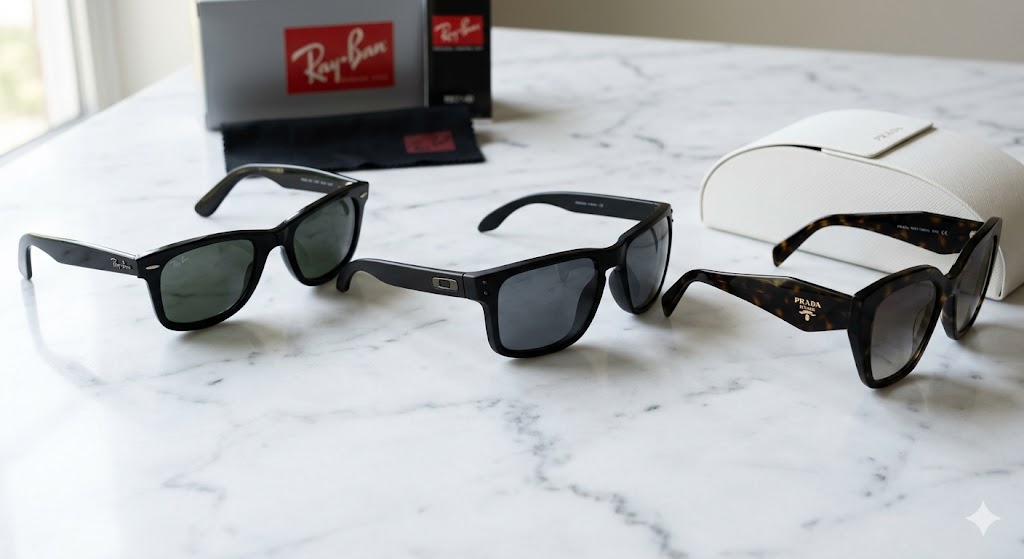
    Polarised lenses go one step further by eliminating horizontal light waves, the reflected glare that bounces off water, roads, and flat surfaces. If you drive regularly, spend time near water, or ski, polarised lenses make a meaningful practical difference to visual comfort and safety. All of our Ray-Ban and Oakley sunglass frames include polarised UV400 lenses as standard.

    • UV400 rating blocks 100% of UVA and UVB radiation
    • Polarised lenses reduce surface glare from water, roads, and snow
    • Lens colour and tint have no effect on UV protection levels
    • Anti-reflective coatings on the inner surface reduce eye strain indoors

    Matching frames to your face shape and lifestyle

    Frame shape is the most personal aspect of choosing sunglasses. The general rule is that frames should contrast with your face shape rather than mirror it. Round frames soften angular faces, angular frames add definition to rounder profiles, and oversized frames balance oblong faces by adding perceived width. Oval faces are the fortunate exception — virtually any frame shape works well.

    Person wearing Ray-Ban Aviator Classic sunglasses on a sunny coastal terrace

    Beyond shape, frame material plays a significant role in comfort and durability. Acetate is lightweight and hypoallergenic, metal is slim and minimalist, and nylon or TR90 is the choice for sport and activity. The best frame is the one that suits your face, fits your lifestyle, and that you reach for instinctively every time you leave the house. Because the protection only works when the sunglasses are actually on your face.